
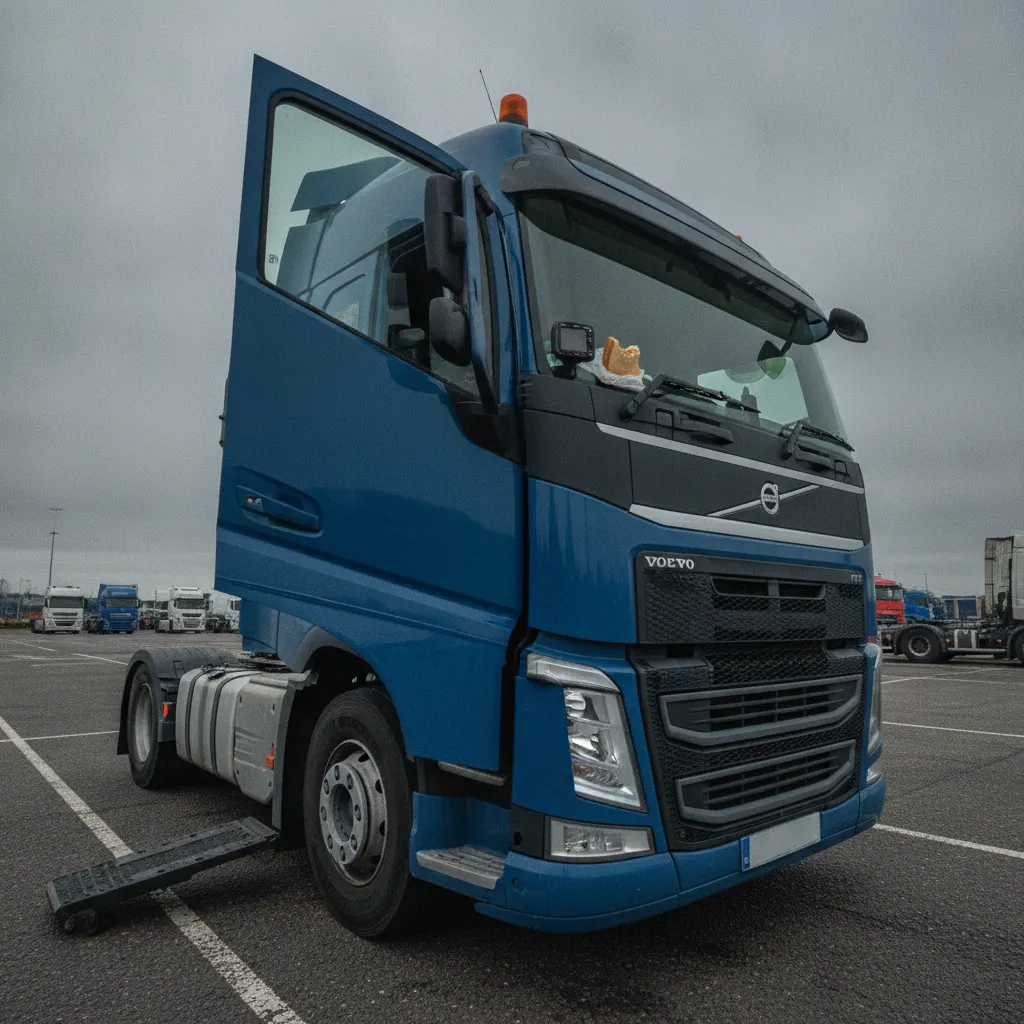
Left DIRFT at six in the morning. Three deliveries before I got back on the motorway — warehouse at Northampton, a builder's merchant near Milton Keynes, then a double-deck tip at a distribution centre outside Luton. By noon I was back on the M1 heading south, and I was convinced I'd had enough breaks between drops to be well within the limit.
Took me until the service area near Watford before I realised I'd never actually taken a qualifying break since six. The 4.5-hour driving accumulation was sitting at just under the limit, and I'd been confusing 'stopped the truck' with 'taken a break.' They are not the same thing.
What the 4.5-hour clock actually counts
Article 7 of EU Regulation 561/2006 says that after a driving period of four and a half hours, a driver must take an uninterrupted break of at least 45 minutes — unless a rest period begins. That's the rule. The question is what counts as 'driving period.'
The answer: accumulated driving time. Actual minutes with the tachograph in drive mode, wheels turning, moving the vehicle. Not clock time since you left the depot. Not time since the last stop. Accumulated driving time.
So if you drive for two hours, stop for an hour to unload, then drive for two and a half hours, you've accumulated four and a half hours of driving time. The unloading stop didn't add to the accumulation — but it didn't reset it either.
That's the bit most drivers get wrong. The stops between deliveries feel like breaks. They're not, unless they meet the legal definition of a break.
What the regulation means by 'break'
Article 4 of 561/2006 defines it precisely. A break is 'any period during which a driver may not carry out any driving or any other work and which is used exclusively for recuperation.'
Two conditions. No driving — straightforward. No other work — that's where it gets people. 'Other work' under the regulation means all activities that count as working time, other than driving. Loading, unloading, securing cargo, completing paperwork, defect checks, fuelling, talking to the customer on behalf of the employer. All of that is other work. None of it qualifies as a break.
So a loading stop — even a long one — is other work. Your 4.5-hour driving accumulation continues to sit where it was when you pulled into the yard. It doesn't go down. It doesn't reset. When you pull away, the clock picks up from where it left off.
A break requires that you do genuinely nothing. No calls to the TM about the next load. No helping with the unload even informally. No paperwork. Nothing. You sit, you eat your sandwich, you dispose of your time freely.
The 15+30 split break — and why the order matters
There's a second way to take the break, and it's useful when you're trying to work around a run that doesn't easily accommodate a 45-minute stop. Article 7 allows the 45-minute break to be replaced by a break of at least 15 minutes followed by a break of at least 30 minutes, distributed across the driving period.
The order is fixed. Fifteen minutes first, then thirty. Not the other way round. And both parts have to meet the full definition of a break — no driving, no other work. If you take a 15-minute stop to eat but spend five minutes on the phone to the TM, that's not 15 minutes of break. That's zero minutes of break and five minutes of other work.
The practical use case: you're running a long distance and you can't find a 45-minute window in one place. You stop at a services for 15 minutes early in the run, then stop again later for 30. That works — provided both stops are genuine breaks and the total driving after the second stop doesn't take you back over 4.5 hours accumulated.
What the split break doesn't do is let you take a 15-minute break and then forget about the 30 minutes. Both parts have to happen. I've had drivers tell me they 'did the split' and when you ask what the second part was, it turns out to be a loading stop at the next drop. That's not the 30-minute part. The 30-minute part has to be an actual break.
The loading stop on a multi-drop run
This is where the rule catches drivers on city multi-drop work more than anywhere else. You leave the depot, drive 20 minutes to the first delivery, spend 45 minutes unloading, drive 25 minutes to the next, spend 30 minutes unloading, drive 35 minutes to the next — and so on. By mid-morning you've done six deliveries, spent hours at customers' premises, and maybe accumulated two hours of actual driving time.
That's fine. You've got another two and a half hours before you hit the limit. The problem comes if you then pick up a trunk run home or a backload and drive solidly for the rest of the afternoon. That additional driving adds directly to your accumulation. If you hit 4.5 hours accumulated driving without having taken a qualifying break at some point during the day, you're in breach.
The tachograph records it accurately. The infringement analysis will show a driving period without a break. DVSA will see it. And 'I was in and out of the vehicle all day' is not a defence, because in and out of a vehicle doing other work is not a break.
Daily rest as the alternative reset
There's one other thing that resets the 4.5-hour accumulation: a rest period. If you take your daily rest — 11 hours minimum under normal rules — your driving accumulation starts again from zero when you next begin driving. You don't need to engineer a qualifying break on the other side of a daily rest. The rest period itself does the job.
This matters for drivers who finish a shift, take their daily rest in the cab, and start the next day. Day two starts with a clean accumulation. But if you start driving at 06:00 and don't take a qualifying break before hitting 4.5 hours of accumulated driving time, no amount of unloading stops will protect you.
What to do mid-run when the accumulation is close
The tacho screen tells you where you are. Driving time accumulated since the last break — most digital tachographs display this or make it calculable from the activity log. If you're approaching 4.5 hours and you've got another hour of driving ahead with no natural break, you need to plan a stop.
Services are fine for this. A lay-by where you genuinely stop and do nothing for 45 minutes works too. The stop has to be a break in the legal sense — but it doesn't have to be a truck stop with a canteen. It just has to be uninterrupted time during which you do no work.
If you're in a position where you can't take a 45-minute break but you can take 15 minutes now and 30 minutes later, plan it out before the accumulation hits the limit. You can't retrospectively count a previous loading stop as part of a split break because loading is other work, not a break. The two parts of a split break have to be genuine rest.
Sounds obvious when it's written out. Took me three infringements to actually internalise it.
If you're tracking your accumulated driving time alongside shift planning, ShiftOwt flags approaching 561 limits so you've got enough runway to schedule a proper stop — £5.99/mo per driver, fleet pricing on request.